| In a protected harbor on Tasman Peninsula, in the mid 1800s the British set up a penal colony where they could transport minor convicts from the British Isles |
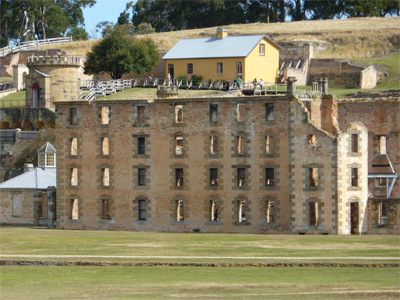
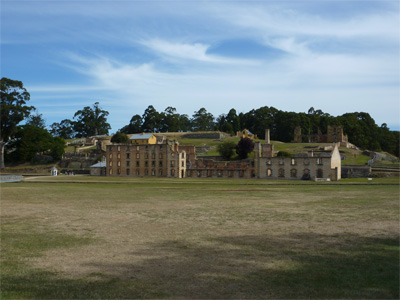
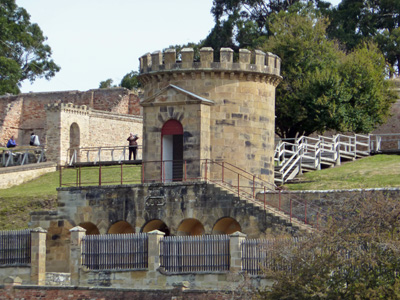
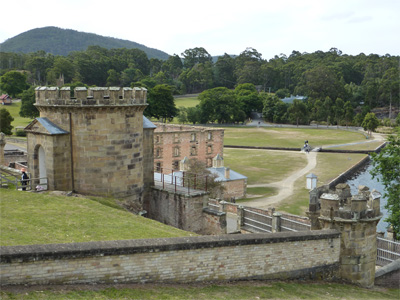
| The convicts, though in leg irons and chains, had the run of the entire town, which was fortified by a garrison of prison guards and a crenellated armory |
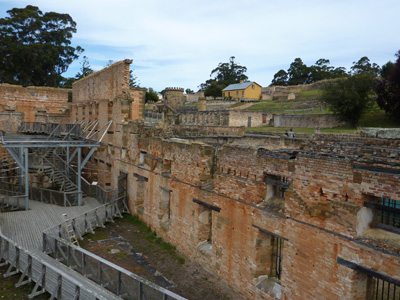
| Convicts made bricks, laid bricks, and built strong buildings which have survived the elements for over 150 years |
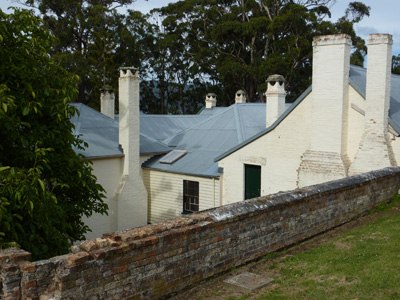
| The Port Arthur buildings are preserved as they were in the mid 1800s and appear now more like a quaint rural English village |
| The garrison overlooked the quay where new transportees arrived and were read the 89 rules of the Port Arthur penal colony |
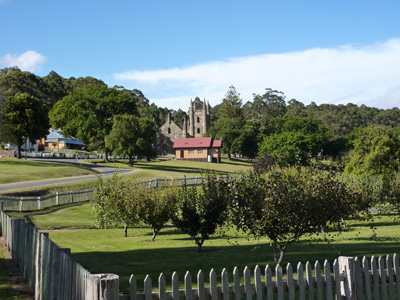
| The village green and fruit orchard. |
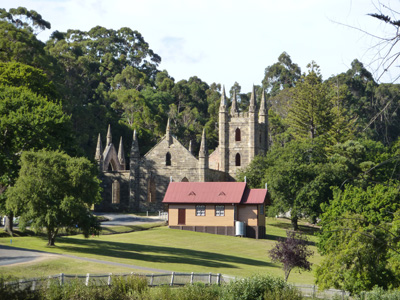
| The now roofless Church of England where officers, administrators and their wives worshiped |
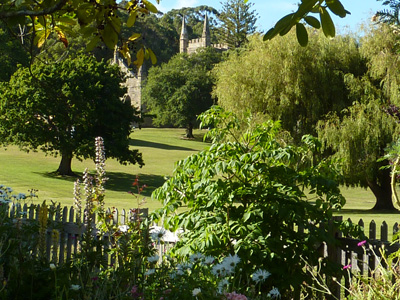
| Cottage gardens were fenced from the animals and prisoners, and grew useful plants and herbs |
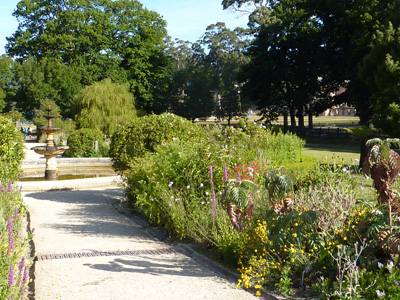
| One of the more far-seeing governors of Port Arthur designed and had built (by convict labor) a park with walking paths, trees, flowers and a central fountain |
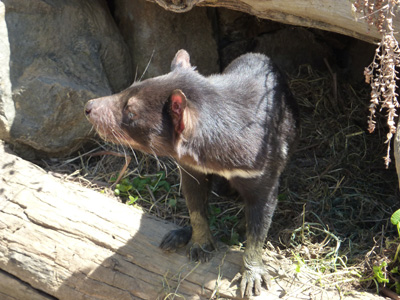
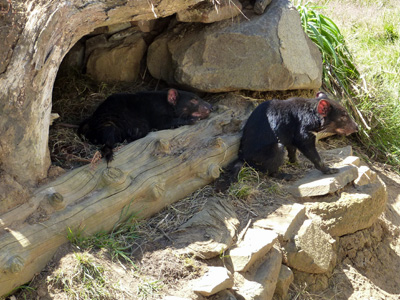
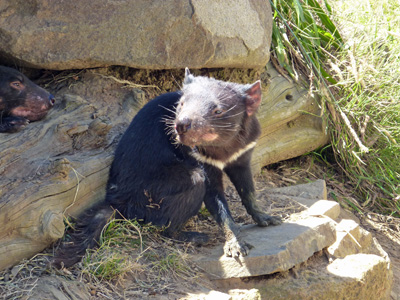
| No trip to Tassie is complete without a view of the Tasmanian Devils |
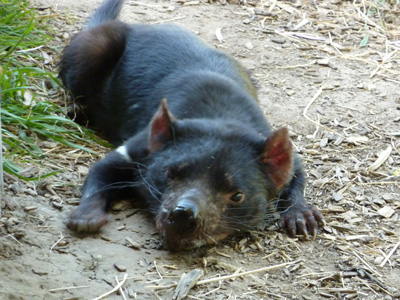
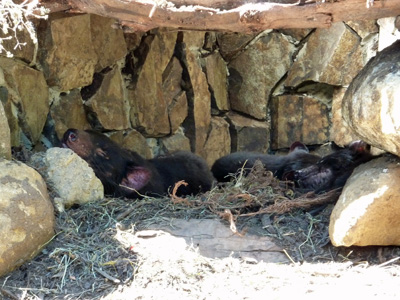
| Tasmanian Devils sleep most of the hot day and take advantage of the cool earth on their bellies |
| The institution was a progressive model for its day: with all the convicts providing skilled or unskilled labor, they built the seaside town of Port Arthur |
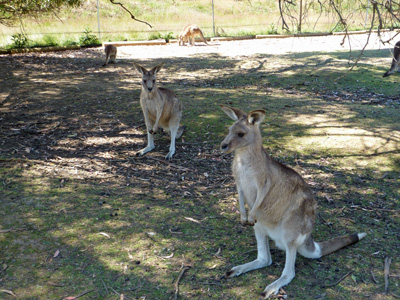
| Grey kangaroos approach gently for a handout |
| What's woken up this little Devil? |
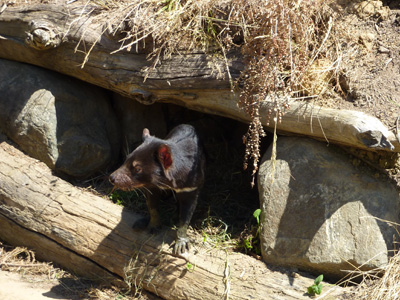
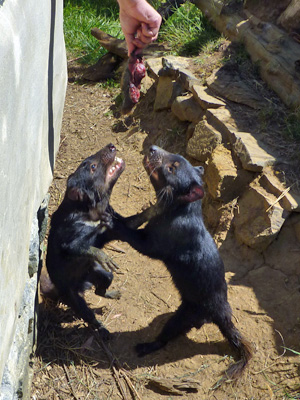
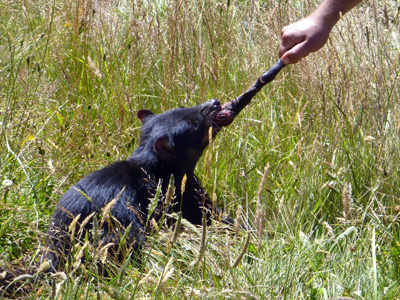
| At 5 minutes to feeding time, all the visitors head for the Devil habitat enclosure, and they've learned to associate the commotion with food! |
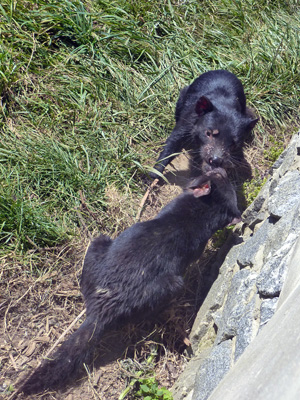
| Tasmanian Devils are normally nocturnal carnivores, but these guys don't want to miss a feed! |
| The keepers tussle with them over food scraps and pieces of roadkill to simulate their natural competition for food |
| They are scrappy little Devils with a very strong bite, chewing up muscle, gristle and bone |
| Tasmanian Devils are known for biting each other's faces in food competition and in play, but now that behavior serves to transmit deadly facial tumors |
| The Devils face imminent extinction from the deadly facial tumors decimating their populations, which is why Sanctuaries such as these as so important |
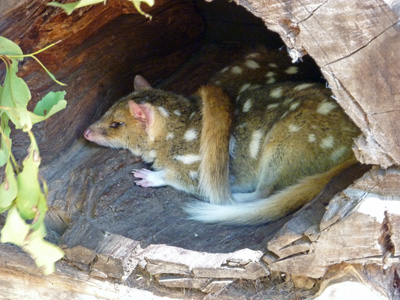
| The Tasmanian Devil Sanctuary also took in other injured wildlife like this Eastern spotted quoll |