| Every chance we got we explored gorgeous NZ--here at Whangarei Falls. |


| The islands and coastal cliffs, the rain and the water and the green make NZ seem like we imagine Ireland. |
| Overcast days were especially moody. |
| OH NO! Prospective buyers are due any day now!! |
| Would you buy this mess of a boat?? |
| ?? How about this version?? We worked like beavers to get it her to look this good! |
| Believe it or not, this is the ¡QB! only 4 days later!! All the former clutter is stashed and crammed somewhere behind the camera! |
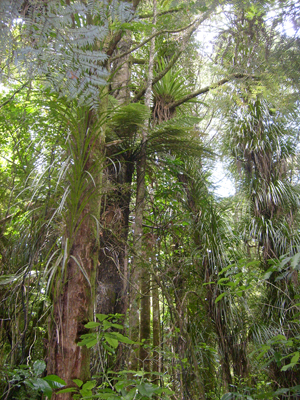


| Tree ferns are some of the Earth's oldest plants, and thrive in these seasonally warm, often wet forests. |
| The predominant forest type in North Island NZ is sub-tropical rainforest. Without any poisonous or dangerous plants or animals it's a hiker's paradise! |
| Lots of little pocket bays shelter flat, sandy landing beaches. |
| One of the most common coastal trees is Pohutukawa, which flowers bright red in December, known as Kiwi Christmas trees. |

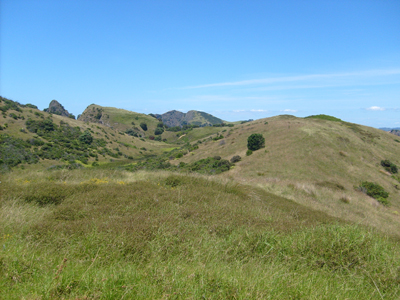

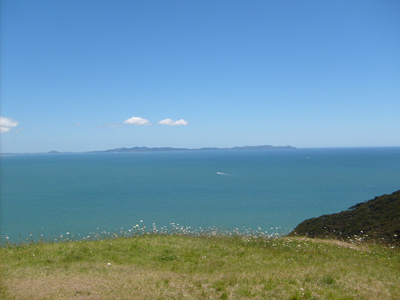
| We tromped all over the hills of the Cavalli Ids, in nearly impenetrable frothy verge up to our thighs! |
| After New Year's we took a sail north from the Bay of Ids to the Cavalli Ids. |
| From the Cavallis we sailed into the wide expanse of Doubtless Bay. |
| The snorkeling might have been great here, but the water temp was 'way too cold for us Tropical Rats. |
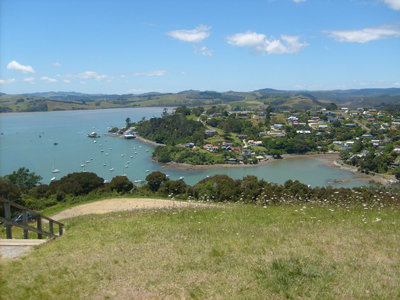
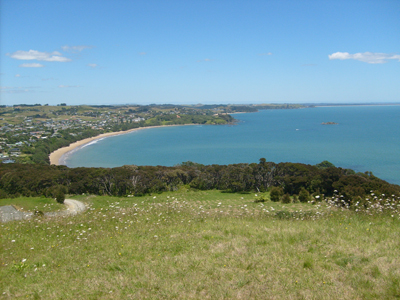
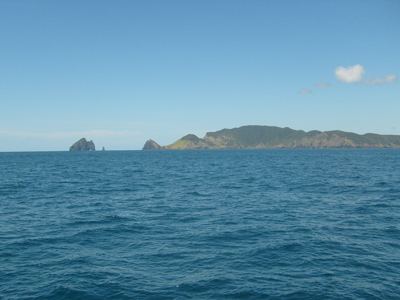

| Over the ridge from Mangonui Harbor was Cooper's Beach along the south rim of Doubtless Bay. |
| Tucked up the Mangonui River in the SW corner of Doubtless Bay, was the town and harbor of Mangonui. |
| One of our stops was in Whangamumu Bay, a scenic reserve and site of a former whaling station. |
| At the end of January 2009 we sailed south along the east coast of North Id, leaving the Bay of Ids at Hole in the Rock. |


| The view from Whangamumu Ridge looking NE toward the USA! |
| The hiking around Whangamumu was hard and steep, but it took us to great lookouts. |
| We also stopped in Whangaruru Bay -- The prefix "whang" means "whales" in the Maori language. The whale populations were almost wiped out for oil 100 years ago, and we saw none. |